Researchers & applications
Define the research objective, success criteria, permissions and constraints in SOFOS SCIENCE. Review candidates and decide what evidence is needed next.

SOFOS SCIENCE / INTELLIGENCE FOR DISCOVERY
Ask the question. Shape the structure.
Follow the evidence.
A research workbench bringing Tetryonics-led design, supporting scientific data and a connected mission record into one place.
Explore the working research prototype. Physical TMCE models and hosted mission services are in development.
The research workbench.
Your question, your mission.
Tetryonics-led construction.
Structures to investigate.
Mission coordination.
Evidence that stays connected.
SDBB / PROPOSED RESEARCH DEPLOYMENT
Bring researchers, TMCE, supporting data and authorised laboratory services together through an institution-controlled research server.
SDBB is the mission coordinator: designed to retain the question, qualify requests, route work and connect returned evidence to the mission that requested it.
Explore the responsibilities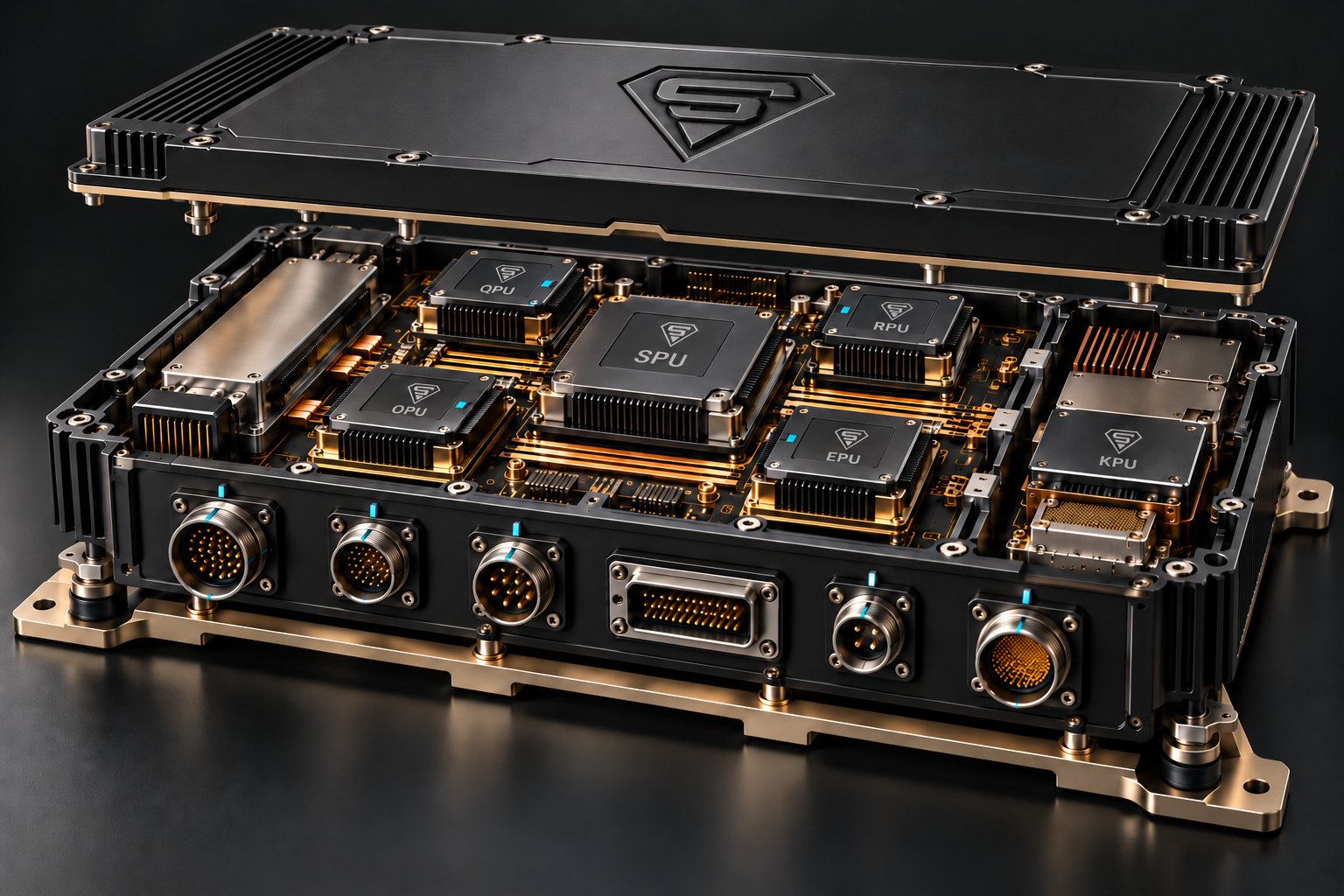
Define the research objective, success criteria, permissions and constraints in SOFOS SCIENCE. Review candidates and decide what evidence is needed next.
An institution-controlled server would provide the interface to SDBB mission capabilities, coordinating approved requests, access policies, provenance and evidence return.
TMCE is the Tetryonics-led construction and modelling engine. Supporting repositories provide reference data; authorised laboratory interfaces would return measurements for comparison with declared predictions.
Institutional control, connected evidence. Deployment may use an SDBB appliance, server software or a combined configuration, subject to implementation and validation. The institution sets hosting, identity and data-access policies. Laboratory operators retain execution, equipment and safety controls.
Current release: this website runs as a local browser prototype. Physical TMCE predictions, live SDBB / GMCC services and laboratory connections are proposed integrations and are not active here.
Working local prototype · Physical TMCE engine and hosted SDBB / GMCC integration pending.
01 / DEFINE THE MISSION
Describe the desired outcome, success criteria and limits before designing a candidate. HELIO Battery is the first application programme; the workbench also supports broader materials research.
HELIO Battery is the development programme. Define its baseline and targets from controlled requirements; no battery performance is inferred from geometry.
Use these fields for battery missions. They are not required for a general science mission.
Nominal Wh = V × Ah. This does not calculate usable energy, power, cycle life, thermal behaviour or approval for an aircraft. One research programme may support different pack designs.
02 / PRIMARY FRAMEWORK + SUPPORTING EVIDENCE
Tetryonics is the primary construction framework for TMCE. Supporting repositories supply reference structures and evidence; their records do not automatically become Tetryonics constructions.
PRIMARY / TETRYONICS
Versioned models, construction rules, structures and reference cases provide TMCE’s design basis. New releases are adopted explicitly; earlier mission versions remain recorded.
Physical model library and engine integration pending. The present rule-pack importer supports geometric rules only.
Retrieve an available 3D record by compound identifier, or load the bundled benzene reference.
Benzene is a molecular-data demonstration, not a battery material recommendation. Network access depends on your browser and PubChem availability.
Import a V2000 SDF with atom coordinates and bonds. Inspect and export its source record.
No molecular record imported.
Materials Project and OPTIMADE adapters are planned for periodic material structures. API keys belong on your server.
Materials Project documentation ↗OPTIMADE providers ↗These links are reference resources. Neither adapter is connected in V0.6.
03 / TMCE DESIGN
TMCE is the Tetryonics Molecular Construction Engine. Its versioned framework supplies the construction logic; SOFOS SCIENCE presents the tools and SDBB coordinates the mission. Independent evidence tests the resulting predictions.
No candidate frozen.
V0.6 freezes a geometric candidate. Its physical interpretation and prediction must come from an implemented TMCE model. Supporting analysis may be attached separately; this scaffold does not generate physical predictions.
The difference is arithmetic, not proof of a theory or of an improved battery. A calibration result is not independent validation.
04 / MISSION PROCESS AND VALIDATION
Plan the comparison, preserve sample lineage and check the proposed laboratory handoff. The HELIONIX tyre-to-anode pathway is the first worked application. Nothing here dispatches tests or operates equipment.
Use TMCE Design to freeze the candidate and record prediction-versus-measurement comparisons. A completeness check below is not laboratory authorisation or scientific validation.
A carbon content result alone does not establish battery-grade material. Purity, structure, contaminants and electrochemical testing remain part of the research plan.
This is a local JSON proposal for integration. No live GMCC endpoint, laboratory dispatch or execution authority is connected.
Target process chain. Purification, graphitisation, electrode preparation and cell testing require their own qualified processes. A record at one stage is not proof that the next stage has been achieved.
05 / MISSION COMPLETION
Record what the mission established, what remains uncertain and what happens next. Completion of a research review does not certify a material or validate a theory.
No mission review recorded.
Reviews retain an input fingerprint and a snapshot of the mission at the time of review. Changed inputs require a new review. Historical decisions remain available.
06 / MISSION RECORDS
Keep the brief, framework release, candidate, supporting sources, comparisons and review history together. Save in this browser or export a portable JSON record. Hosted SDBB storage is a future integration.
Local saves stay in this browser. Export JSON for a portable copy. No file is sent to a server by saving locally.
V0.6 provides geometric construction, V2000 molecular data viewing, mission briefs, review snapshots, local records, pack arithmetic and JSON export. It has no physical Tetryonics solver, chemistry optimisation, material synthesis control or live SDBB / GMCC service.
PubChem PUG RESTTetryonics source overviewPublished waste-tyre graphitisation researchWORKED MISSION / DEMO ONLY
Review a synthetic mission without entering your own data. This simulation is separate from your working research records.
Numbers, reports, predictions, permissions and outcomes are scripted examples. They do not describe HELIONIX output, prove TMCE physics or qualify a battery.
READY
Step through the dummy batches, model prediction, laboratory evidence and review decisions.
Example-only criteria: carbon purity minimum 99.5%; conductivity fixture prediction 100 S/cm; review if deviation exceeds 10%. These are not battery specifications. The model-disagreement branch closes without promotion.
This proposed baseline identifies what must be specified and evidenced. It is not a completed plant assessment, operating procedure or regulatory compliance determination. Every row needs review against the actual engineering package.
| ID and requirement | Responsible team | Evidence to review | Status |
|---|